
Dev has been hitting 150 grams of protein a day for eight months, and he's still not sure it's doing anything.
He tracks it, he weighs it, he's consistent. His lifts have drifted up slightly and his recovery has drifted down slightly, and he can't work out whether the food is the problem or not. When a friend suggested he look at what kind of protein he was eating rather than how much, he didn't have an answer, because nobody had ever suggested protein had a "kind."
That's a gap in how most people learn this. We teach protein as a single number. It isn't.
The number everyone tracks is the least informative one
Protein is not a fuel the way fat and carbohydrate are. It's a raw material, and the thing your body does with the raw material is build and repair tissue, mostly muscle.
Building muscle requires nine amino acids your body can't make for itself. These are the essential amino acids, and the one that matters most for triggering muscle protein synthesis, the process where your body actually builds, is leucine. Not total protein. Leucine specifically flips the switch, and everything downstream of that switch depends on it being present in enough quantity at the same time as the rest of the amino acids.
This is the level at which protein sources stop being equivalent. A food can hit your gram target for the day and still leave your muscle-building machinery under-supplied, because it didn't bring enough of the amino acid that starts the process.
Grams tell you how much arrived. The amino acid profile tells you whether any of it got used.
Complete, incomplete, and the ones that split the difference
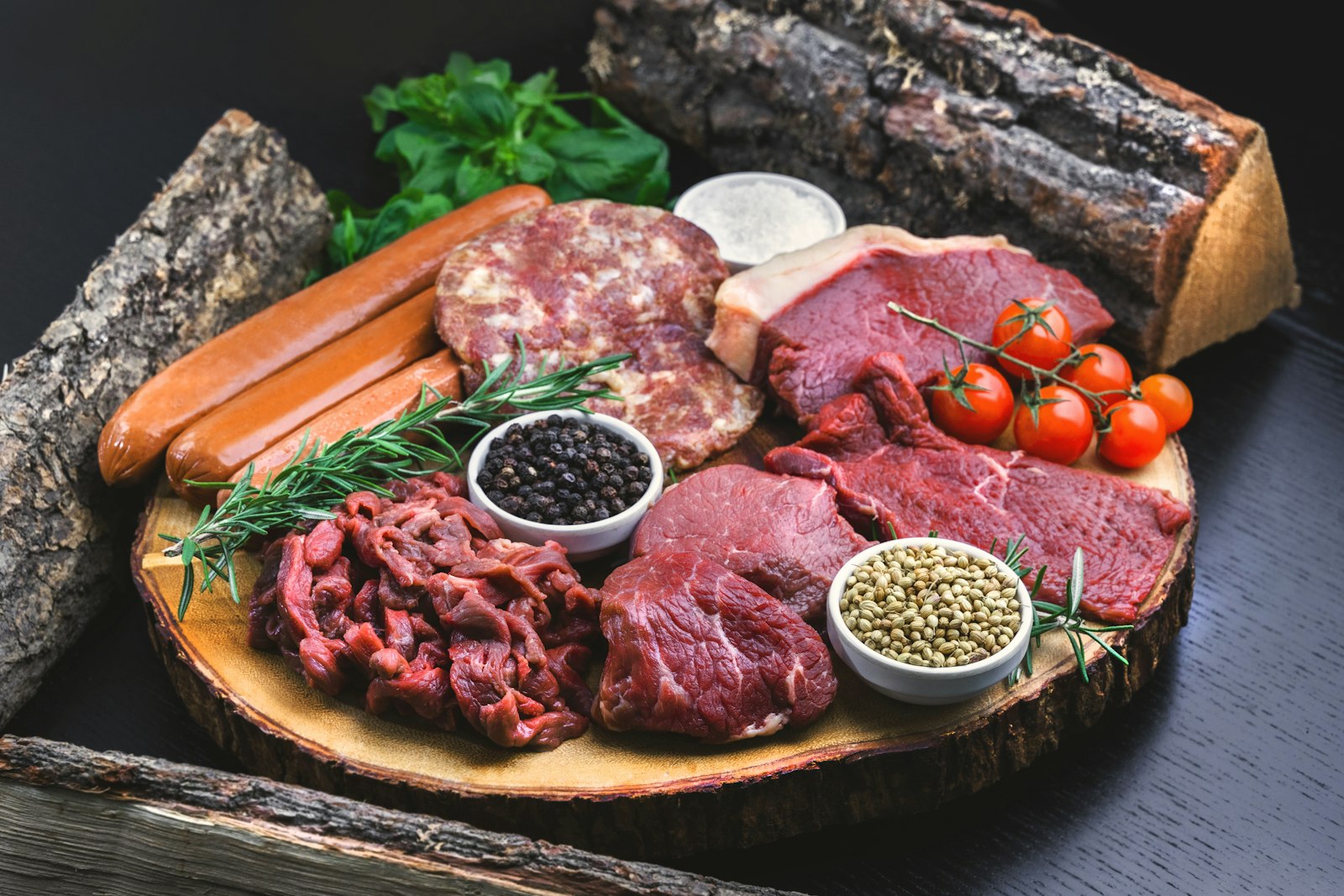
Animal proteins, meaning eggs, dairy, meat and fish, arrive complete. They carry all nine essential amino acids in proportions your body can use, and they're rich in leucine. If you eat mostly animal protein, quality is largely a solved problem, and your concern shifts to sourcing and processing rather than amino acids.
Plant proteins are the harder case, and it's not a knock on plants. Most individual plant sources are low in one or more essential amino acids. Rice is low in lysine. Wheat is low in lysine too. Legumes are low in methionine. A single-source plant protein, on its own, will typically deliver fewer usable grams than the label suggests.
The fix is either to combine sources so their gaps cover each other, which is what traditional food cultures did without naming the science, or to buy a plant protein blend designed to reach a complete profile in one scoop. Most people do the second thing, because the first requires thinking about amino acids at every meal, and nobody keeps that up past week three.
Why the form of a supplement matters more than the flavour
Walk down the protein aisle and the labels are selling you taste. The thing that changes outcomes is the processing.
Whey isolate and whey concentrate both start from milk, and they differ in how much is filtered out. Isolate goes through more filtration, which strips out most of the fat and the lactose and leaves a higher proportion of protein by weight. That matters on low-carb for a boring reason: it delivers the protein without the incidental carbohydrate and fat you'd otherwise be counting, so it fits more precisely into a day where the numbers are tight. It also tends to be easier on people who react to lactose.
There's a second variable, which is what's been added. Some powders are mostly protein with a little flavouring. Others are protein plus a sweetener blend plus bulking agents, and the additions can quietly work against a low-carb diet. That's why grass-fed whey isolate with added MCT is a different product from the cheapest chocolate-flavoured powder on the shelf. It's not that the MCT is doing something dramatic. It's that the product was formulated for this diet rather than adapted from a mainstream recipe.
Two powders can both say 25 grams of protein and behave completely differently in your day.
One honest low-carb email a week
Food, training and the actual numbers. No dogma, unsubscribe any time.
Practical moves that matter more than the brand
Set your floor and hold it, including on rest days. Muscle maintenance doesn't take days off. A common starting point is somewhere around 1.6 grams of protein per kilogram of body weight per day for someone training, and it's worth discussing with a professional if you're managing a condition.
Spread it rather than saving it up. Your body's response to protein is per-meal, not per-day. Three or four meals each carrying a solid dose will do more than one enormous dinner. There's a limit to how much you can use in a single sitting for muscle-building purposes.
Pick complete sources when you can. Eggs, dairy, meat and fish do the job without you having to think about amino acids.
If you're plant-based, blend, don't guess. Either pair complementary sources across the day or buy a blend that was built to cover the gaps. And check whether the serving actually delivers a leucine dose, not just a protein number.
Look at the ingredient line before the protein number. A powder with five ingredients, one of which is protein, sits differently in your day than one with twenty, four of which are sweeteners.
Watch the incidental carbs. This is the quiet one. Two or three grams of carbohydrate per scoop doesn't sound like much until you're having two scoops a day and wondering why the scale moved. On a diet measured in tens of grams, labelling detail is not pedantry.
That's roughly the standard a grass-fed whey protein isolate formulated for keto and low-carb is built to, and it's a fair benchmark to hold the rest of the shelf against.
If you want to go deeper, reading supplement labels properly and protecting lean mass on keto pick up where this leaves off.
Sources
- Protein and amino acid requirements: leucine, muscle protein synthesis and per-meal dosing. Journal of the International Society of Sports Nutrition. https://jissn.biomedcentral.com/
- Dietary Reference Intakes for Energy, Carbohydrate, Fiber, Fat, Fatty Acids, Cholesterol, Protein, and Amino Acids. National Academies of Sciences, Engineering, and Medicine. https://www.nationalacademies.org/our-work/dietary-reference-intakes-for-energy-carbohydrate-fiber-fat-fatty-acids-cholesterol-protein-and-amino-acids
- Protein intake and muscle mass: a systematic review. British Journal of Sports Medicine, 2018. https://bjsm.bmj.com/content/52/6/376
- Legion Athletics: grass-fed whey protein isolate with MCT. https://legionathletics.com/
This article is educational, not medical advice. If you have kidney disease, a metabolic condition, or take medication, talk to a qualified professional before making significant changes to your protein intake.