Marta quit keto on day four, and she still describes it as "the diet that gave me migraines."
That's what she told people at work, because it was the honest thing she could point to. What she didn't mention was the rest of it. She woke on day two with a dull pressure behind her eyes, decided it was dehydration, and drank two litres of water. Day three she felt worse. Foggy, flat, snapping at her partner over the recycling. Day four she stood up off the sofa too fast and had to sit back down.
Nobody had told her that the first week of low-carb eating is, for a lot of people, a salt problem wearing a disguise. She thought she was failing at a diet. She was mostly just short of minerals.
What cutting carbs actually does to your body's water
Here's the mechanism, and it's worth understanding because it explains almost everything you feel in week one.
Insulin does more than move sugar around. It also tells your kidneys to hold on to sodium. On a normal diet that's useful. When you cut carbohydrates hard, insulin drops, and your kidneys stop being so stingy with sodium. They start dumping it in your urine, and water follows sodium out with it.
Physiologists have known about this for sixty years. Fasting studies through the 1960s and 70s described a rapid loss of sodium, potassium, and water in the first days, and researchers found the same pattern when they studied ketogenic diets directly. A 2025 scoping review in the Journal of Human Nutrition and Dietetics describes it plainly: sodium and potassium excretion is highest in the first one to four days of a ketogenic diet, and the losses taper off after about two weeks.
That early drop in water is also why the scale rewards you so fast in week one and then goes quiet. Some of that first weight is genuinely fat. A lot of it is water leaving with the sodium.
The headache, the fog and the leg cramps in week one aren't moral failures. They're a mineral bill coming due at the same time.
The three that matter, and what each one does when it runs low
You lose all three of these faster than usual in the first weeks. They don't fail in the same way, so they don't feel the same either.
Sodium. This is the one you lose most of, and the one people are most scared of. That fear is inherited from decades of blanket "cut the salt" messaging aimed at a population eating mostly packaged food. If you cook from scratch and you've cut the bread and the crisps, you may have removed the two biggest sodium sources in your diet without noticing. Low sodium shows up as headache, dizziness on standing, fatigue, and a flat grey mood. The review above links the dizziness and fainting directly to the fall in sodium and the small drop in blood volume that follows.
Potassium. When sodium goes, your body's hormone response tries to claw it back, and it does that partly by pushing potassium out. Low potassium tends to announce itself in muscle: twitches, cramping, constipation, and a general heaviness in your legs. It's the reason your calves wake you at 3am in your first low-carb week.
Magnesium. The quiet one. Magnesium is involved in hundreds of enzyme reactions, and it's the mineral most people are short of before they ever start a diet. Insufficient magnesium shows up as cramps, poor sleep, and a jittery feeling that's easy to mistake for anxiety. The National Academies set the recommended daily intake at 400 to 420 mg for men and 310 to 320 mg for women, and roughly half of adults in the US fall short.
Why "just drink more water" makes it worse
This is the advice that actively hurts people, so it deserves its own section.
If your problem is that you've lost sodium, drinking four litres of plain water a day dilutes what's left. You feel bloated and still foggy, and you're now peeing out even more of what you were short of. Marta's two litres on day two wasn't the fix. It was the second half of the problem.
The National Academies put adequate sodium intake at around 1,500 mg a day for adults, with a chronic-disease risk-reduction target around 2,300 mg for the general population. Those numbers were written for people eating the standard Western diet, roughly seventy percent of which is packaged and restaurant food. If you've stripped that out and you're sweating from exercise on top, the target written for a sedentary person eating supermarket food is not the target that fits you.
That doesn't mean salt is free. It means the number on the government page assumes a diet you're no longer eating.
Water without minerals is just a faster way to lose the minerals.
Get the low-carb notes, no dogma, no preaching
One honest email a week on food, fat loss and the messy human parts. Unsubscribe any time.
What replacing them looks like in practice
You don't need to overthink this, and you don't need to buy much.
Salt your food properly. If you cook at home, add real salt to your meals and taste them. Broth or bouillon is the old-school move and still a good one, because a cup of it delivers a meaningful sodium hit in a form you'll actually drink. One to two cups a day is the range most low-carb practitioners land on, with an extra cup before training.
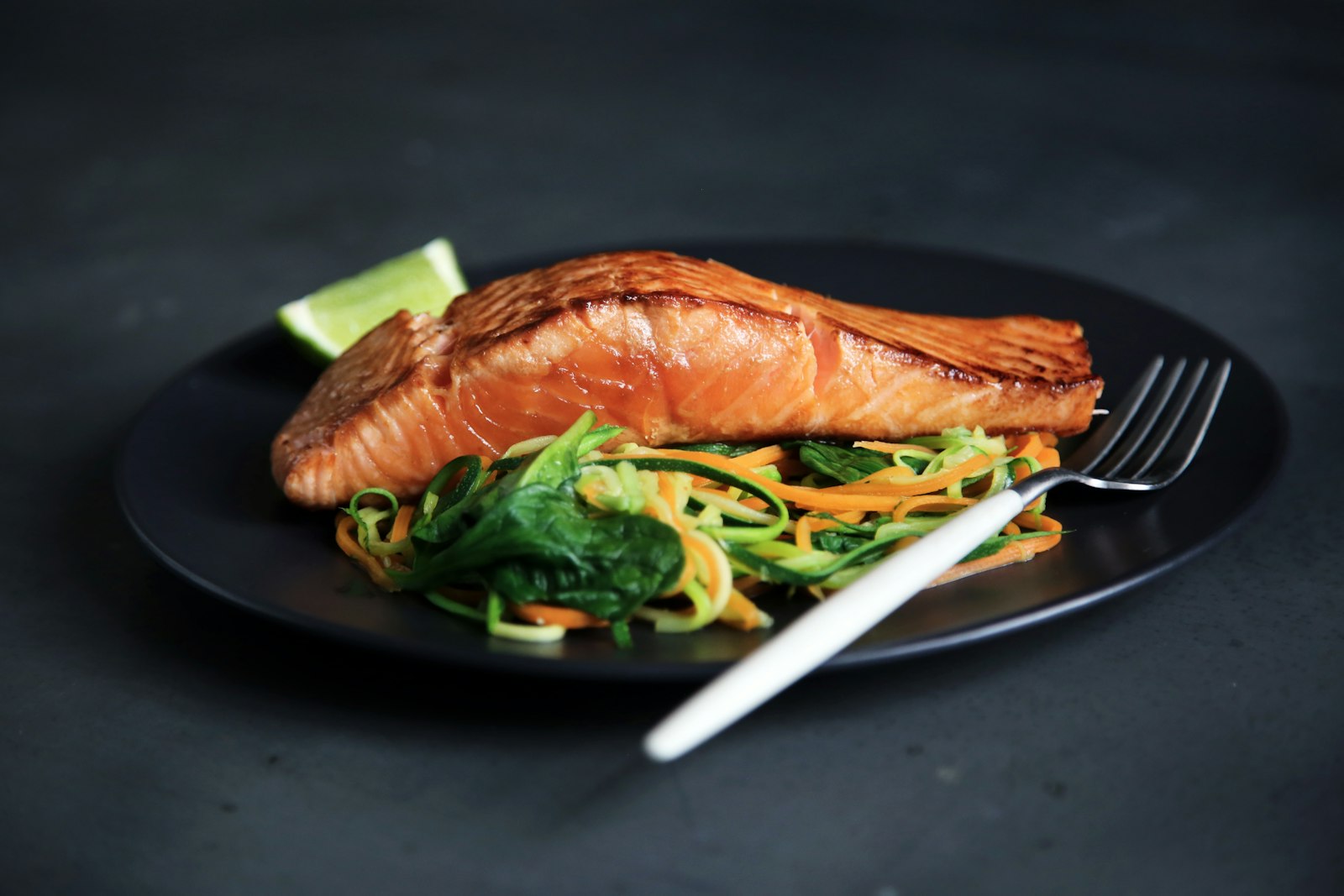
Eat potassium rather than chasing it. Avocado, dark leafy greens, salmon, mushrooms, and nuts all carry useful potassium. There's a reason avocado toast shows up in every low-carb argument: the avocado is doing the work.
Take magnesium at night. It's easier on the stomach with food, and the sleep benefit is a bonus. Look for a chelated form, and stay under the 350 mg supplement ceiling the National Academies set for adults unless a doctor tells you otherwise.
Keep water sensible, not heroic. Drink to thirst and then add minerals to the water you drink. Two litres of plain water is not better than one and a half litres with salt in it.
Give it two weeks. Excretion settles by around day fourteen. Most people who feel terrible in week one and stick with it feel considerably better by the end of week two. That's not willpower paying off. It's physiology catching up.
When you're feeling rough at the wrong moment
The annoying thing about electrolyte loss is that it doesn't check your calendar. It shows up on the day of the long drive, the morning of the presentation, the Saturday you planned to train.
That's where a measured electrolyte drink earns its place. A stick of electrolyte powder with a known sodium and potassium content removes the guesswork from a day you don't have room to feel bad. It's not magic and it won't fix a diet, but it's a predictable way to get the minerals your kidneys are busy dumping, in a form you'll actually drink. If you want a zero-sugar, keto-friendly option with a genuinely high sodium content, an electrolyte drink mix built for low-carb hydration is one of the better-regarded ones, mostly because it doesn't pretend salt is the enemy.
That's the whole point of this article, really. Salt isn't the enemy. Salt is what you're missing.
If you want to go deeper, preventing the keto flu with proper hydration and finding good value electrolyte drinks pick up where this leaves off.
Sources
- Symptoms during initiation of a ketogenic diet: a scoping review of occurrence rates, mechanisms and relief strategies. Journal of Human Nutrition and Dietetics, 2025. https://pmc.ncbi.nlm.nih.gov/articles/PMC11978633/
- Consumer Reports of "Keto Flu" Associated With the Ketogenic Diet. Frontiers in Nutrition, 2020. https://pmc.ncbi.nlm.nih.gov/articles/PMC7082414/
- Dietary Reference Intakes for Sodium, Potassium and Magnesium. National Academies of Sciences, Engineering, and Medicine. https://www.nationalacademies.org/our-work/dietary-reference-intakes-for-sodium-and-potassium
- Office of Dietary Supplements: Magnesium Fact Sheet for Health Professionals. National Institutes of Health. https://ods.od.nih.gov/factsheets/Magnesium-HealthProfessional/
- Dietary Guidelines for Americans 2015-2020. US Department of Agriculture and US Department of Health and Human Services. https://health.gov/dietaryguidelines/2015/resources/2015-2020_dietary_guidelines.pdf
This article is educational, not medical advice. It isn't a substitute for care from a qualified professional. If you take medication or manage a health condition, talk to your doctor before changing how you eat or how much salt and minerals you take in.