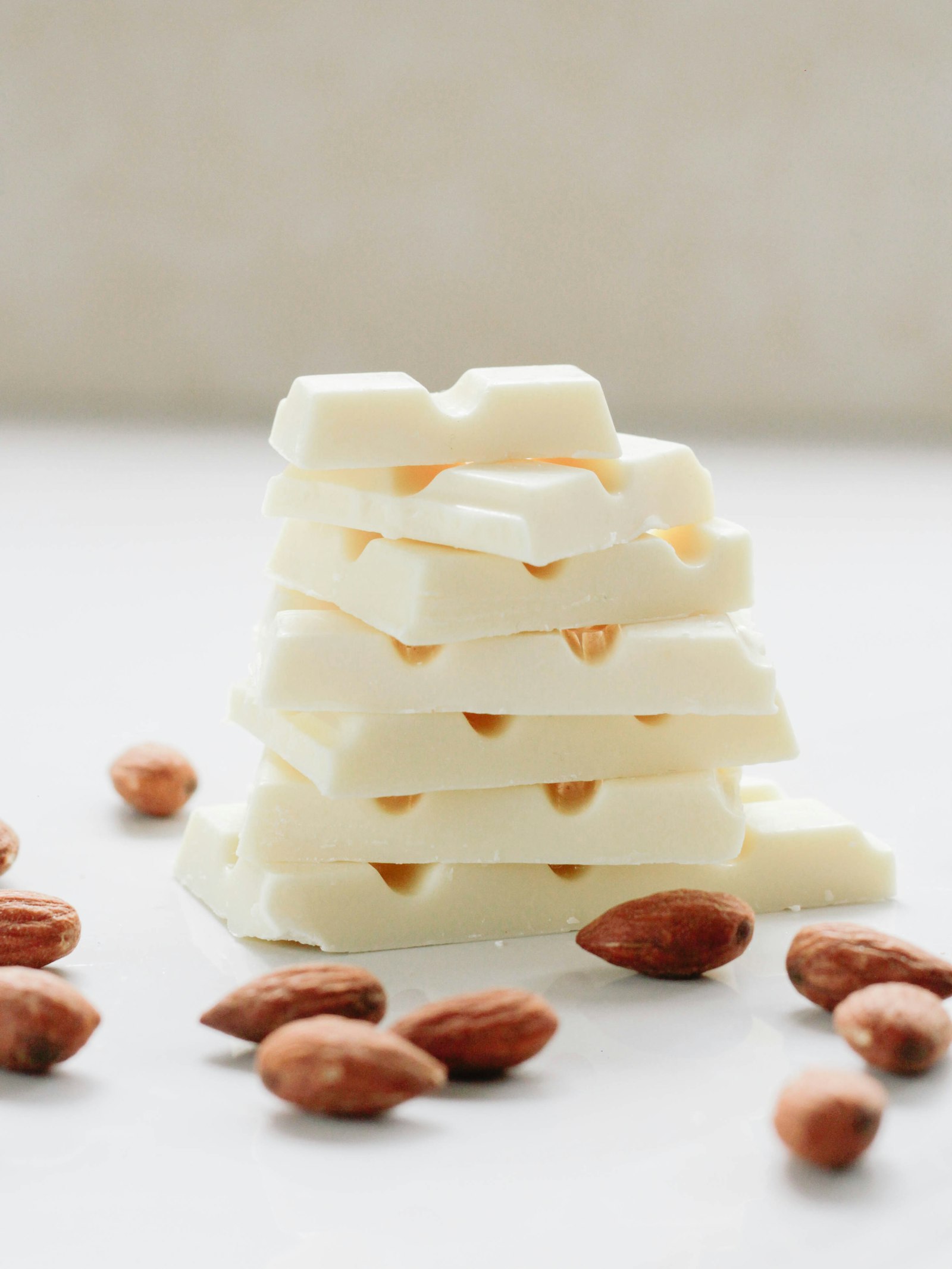
The craving arrives in the evening, the way it always does. You've eaten well all day. You're not hungry. You just want something sweet, and you remember you have a "keto" chocolate bar in the cupboard, so you eat it, and for twenty minutes everything is fine.
Then your stomach starts to talk.
If that story sounds familiar, you're not doing keto wrong. You've probably just met a sugar alcohol.
What sugar alcohols actually are
Sugar alcohols are neither sugar nor alcohol. The name is a chemistry term. They are sweeteners that appear naturally in some fruit, and are made commercially from starches, and they carry names you'll recognise on a label: maltitol, sorbitol, xylitol, erythritol, isomalt.
They look great on paper. They taste sweet. They don't raise blood sugar the way table sugar does. And because they aren't fully digested, they carry a much lower calorie count. That's how a chocolate bar ends up with four grams of "net carbs" on the front.
The catch is in that third point. "Not fully digested" is doing a lot of work in that sentence, and your colon is the one that finds out.
Why maltitol is the usual culprit
Not all sugar alcohols behave the same way, and the differences matter.
Maltitol is the one that shows up in the most products, because it's cheap and it tastes closest to real sugar. It's also the one that causes the most trouble. The same indigestibility that gives it low carbs means it arrives in your large intestine largely undigested, where your gut bacteria have a party with it. For a lot of people that shows up as gas, bloating, and a sideways look at the nearest bathroom.
There's a reason the US Food and Drug Administration requires a specific warning on products containing sorbitol and mannitol: a statement that eating too much can cause a laxative effect. That warning exists because enough people found out the hard way that it became a labelling rule.
A sweetener that isn't absorbed has to go somewhere. Your gut is the somewhere.
The ones that behave better
Not every sugar alcohol is the same story:
- Erythritol absorbs into the bloodstream before reaching the large intestine, so far less of it ends up fermenting. It's the most gut-friendly of the sugar alcohols for most people, though it can still cause trouble in large amounts, and recent research has raised questions worth following.
- Xylitol and sorbitol sit in the middle, gentler than maltitol for many people but still capable of the fermenting party.
- Maltitol is the one most responsible for the famous "sugar-free sweet" disaster.
Beyond sugar alcohols, there's a separate family of sweeteners that skip the gut problem entirely: stevia, monk fruit, and allulose. These aren't sugar alcohols. They're sweet-tasting compounds that pass through largely unmetabolised, which is why a bar built on them tends to leave your stomach alone.
How to test your own threshold
This is individual. Some people eat a sugar-alcohol bar and notice nothing. Others feel it within an hour. You won't know which one you are until you try, so try deliberately:
- Start with a small portion, not a whole bar, and eat it at home, not out.
- Wait a day. If nothing happens, repeat with a slightly larger portion.
- Keep the experiment separate from anything else new you've eaten, so you can actually attribute the result.
- If you react, note which sweetener was in the product, not just the brand.
The point isn't to forbid sugar alcohols forever. It's to know your own number, the way you know how much coffee you can drink before it costs you sleep.
Reading the label for the sweetener, not the claim
Reading the ingredient list and finding the sweetener is the skill that fixes the problem for good. "Sugar-free" and "keto-friendly" tell you nothing about which sweetener was used. Two bars with identical net-carb counts can sit at completely different ends of the gut-comfort spectrum, because one is built on maltitol and the other on monk fruit.
If it ends in "-ol" (other than erythritol), expect the fermentation. If it says stevia, monk fruit, or allulose, expect to be left alone. That single habit will save you more discomfort than any amount of willpower.
A house that builds its range around stevia and monk fruit rather than sugar alcohols tends to be the one people land on after a bad maltitol experience, and if you want a brand that made that choice deliberately, sugar-free chocolate made without sugar alcohols is the kind of thing to look for.
The part nobody wants to hear
Even a perfectly clean keto sweet still keeps the craving alive. Sweetness, whatever the source, tells your palate that sweet is on the menu, and the next sweet is easier to reach for than the first. That's not a moral failing. It's just how habits work.
The people who handle cravings best usually do two things. They keep one reliable treat that doesn't hurt them, so they're never white-knuckling it. And they treat it as a treat, not a food group. Chocolate is a nice way to end a day. It's a hard way to build one.
One honest email a week on low-carb food
No dogma, no guilt, no twelve-step sweetener rituals. Unsubscribe any time.
If you want to go deeper, baking that skips the sugar crash and timing low-carb treats pick up where this leaves off.
Sources
- US Code of Federal Regulations, 21 CFR 101: food labelling, including the laxative warning requirement for sorbitol and mannitol. https://www.ecfr.gov/current/title-21/chapter-I/subchapter-B/part-101
- Sugar alcohols (polyols) and gastrointestinal tolerance: systematic review of effects on GI health. Advances in Nutrition, 2017. https://pubmed.ncbi.nlm.nih.gov/28710145/
- Gastrointestinal effects of low-digestible carbohydrates, including sugar alcohols. Journal of the American Dietetic Association, 2009. https://pubmed.ncbi.nlm.nih.gov/19234944/
- ChocZero: sugar-free, no sugar alcohols, keto-friendly chocolate and syrups. https://www.choczero.com/
This article is educational, not medical advice. If you have diabetes, a digestive condition, or take medication, talk to a qualified professional before making significant changes to how you eat.